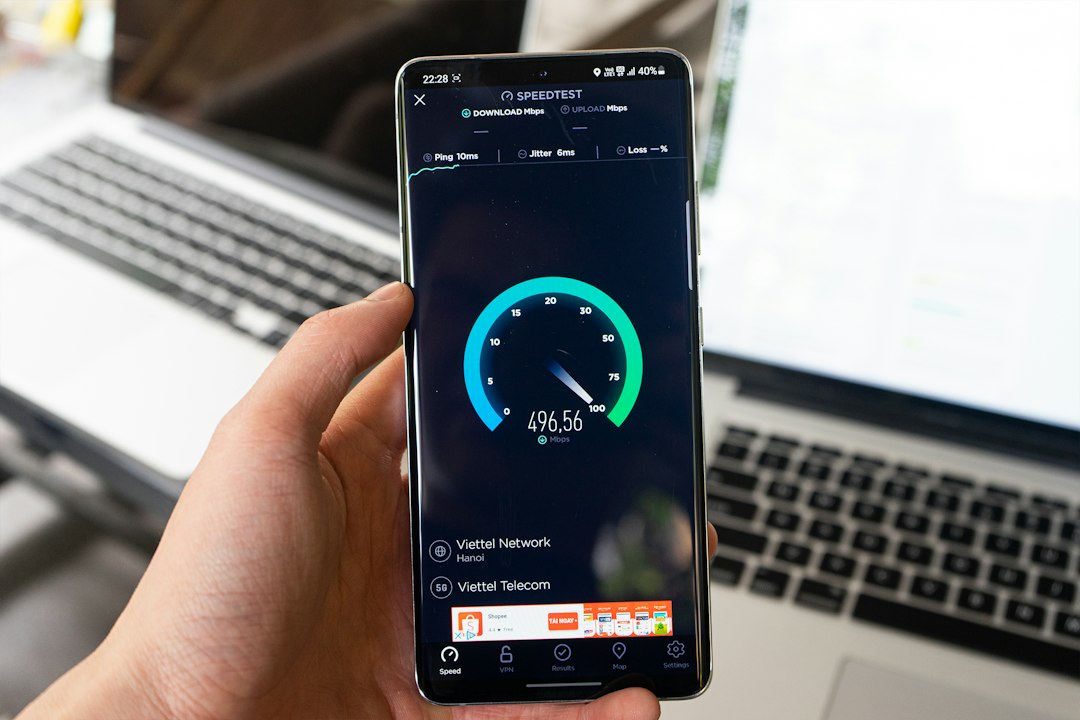
What is 5G technology? It is the fifth generation of mobile network technology, designed to deliver faster speeds, much lower delay (latency) and room for far more connected devices than 4G. In everyday use, 5G means smoother video calls, quicker downloads and better support for smart devices, although the speed you get depends heavily on which type of 5G your carrier offers.
Key Takeaways
- 5G is the newest mobile network standard, built for higher speeds, lower latency and more connected devices than 4G.
- There are three types of 5G: low-band, mid-band and high-band (mmWave), and each trades speed against coverage.
- Typical latency drops from roughly 30 to 50 milliseconds on 4G to about 1 to 10 milliseconds on 5G.
- Advertised peak speeds are rarely what you will see, because real speeds depend on the band, your location and how busy the network is.
- You need a 5G phone and a 5G plan, but the benefits are strongest in mid-band and high-band areas.
What Is 5G?
5G stands for fifth generation, and it is the latest standard for cellular networks. It builds on 4G LTE by using a wider range of radio frequencies, smarter antennas and a more flexible network design. The goals are faster downloads, near-instant responses and the ability to connect huge numbers of phones, sensors and machines at once.
How Does 5G Work?
5G works by sending data over radio waves between your device and nearby cell sites, using a broader set of frequencies and newer technology than 4G. A few key ideas make it different:
- More spectrum: 5G uses low, mid and high frequency bands instead of only lower frequencies.
- Massive MIMO and beamforming: many small antennas send focused beams to your device, which improves signal quality and capacity.
- Small cells: especially for high-band 5G, many small transmitters sit closer together on poles and buildings.
- Network slicing: carriers can create separate virtual networks for different needs, such as a low-latency slice for hospitals.
- Edge computing: data is processed closer to users to cut delay. Learn more in our guide to what edge computing is.
What Are the Three Types of 5G?
The three types of 5G are low-band, mid-band and high-band, also called mmWave. Each uses different frequencies, and the main trade-off is between coverage and speed.

| Band | Coverage | Typical peak speed | Best for |
|---|---|---|---|
| Low-band (below 1 GHz) | Widest, passes through walls well | Up to about 100 Mbps | Broad coverage, rural areas |
| Mid-band (about 1 to 6 GHz) | Several miles | Up to about 1 Gbps | The best everyday balance |
| High-band or mmWave (above 24 GHz) | Very short, under about 1,500 feet | Up to about 10 Gbps | Stadiums, dense city areas |
These are peak figures under good conditions. Real-world speeds are usually lower and vary by carrier and location.
Low-band 5G reaches the most people, with some US carriers covering 85 to 95 percent of the population, but its speed is only modestly better than 4G, and one carrier described about a 20 percent bump over LTE. Mid-band, including the C-band spectrum, is widely seen as the sweet spot, and mmWave is extremely fast but is easily blocked by walls and trees.
What Is the Difference Between 5G and 4G?
| Feature | 4G LTE | 5G |
|---|---|---|
| Typical latency | About 30 to 50 ms | About 1 to 10 ms |
| Peak speed (theoretical) | Up to about 1 Gbps | Up to about 10 to 20 Gbps |
| Frequencies | Mainly below 6 GHz | Low, mid and high bands |
| Devices per area | Fewer | Many more |
| Best for | Streaming, browsing | Real-time apps, smart devices |
The biggest everyday difference is latency, not raw speed. Lower delay makes video calls, online gaming and cloud apps feel more responsive. If you want to speed up your connection at home too, see our guide to increasing your internet speed without upgrading.
How Does 5G Affect You in Everyday Life?
- Faster downloads and streaming: movies and apps download in seconds in good mid-band or mmWave areas.
- Smoother calls and gaming: lower latency means less lag.
- Home internet: 5G home broadband gives an alternative to cable or fibre in some areas.
- Better crowds: 5G handles more people in one place, such as stadiums and concerts.
- Smart devices: it supports far more connected devices, which helps the Internet of Things and our favourite smart home devices.
What Are the Real-World Uses of 5G?
- Healthcare: low latency could support remote consultations and, in the future, remote procedures.
- Self-driving and connected cars: vehicles can share data in near real time.
- Factories and logistics: wireless sensors and robots coordinate on private 5G networks.
- Smart cities: traffic lights, cameras and sensors work together.
- AR and VR: immersive apps need fast, low-delay connections.
Do You Need a 5G Phone?
You need a 5G-capable phone and a plan that includes 5G to use it, and most new mid-range and premium phones already have it. If you are buying a new phone, choosing one with 5G is sensible because it will last longer as networks grow. See our guide to the best budget smartphones in 2026 for affordable 5G options. Check your carrier’s coverage map first, because the experience in your area depends on which band is available.
Is 5G Safe and Secure?
5G uses non-ionising radio waves, like earlier mobile generations. Major health agencies say that, to date, research has not shown harm from exposure within international safety limits. On security, 5G adds stronger encryption and features such as network slicing, but your devices and accounts still need protection. Keep your phone updated and use strong passwords and two-factor authentication.
Frequently Asked Questions
What is 5G in simple words?
5G is the newest generation of mobile networks, offering faster speeds, lower delay and the ability to connect many more devices than 4G.
How fast is 5G?
Peak speeds can reach about 100 Mbps on low-band, about 1 Gbps on mid-band and about 10 Gbps on mmWave under ideal conditions. Real speeds are usually lower and depend on your carrier and location.
Is 5G better than 4G?
Yes, mainly through lower latency, higher capacity and faster speeds on mid-band and mmWave. Low-band 5G is only slightly faster than 4G.
Do I need a new phone for 5G?
Yes. You need a 5G-capable phone and a plan that supports it. Most recent mid-range and premium phones include 5G.
Does 5G use more battery?
It can in areas with a weak 5G signal, because the phone searches harder for a connection. Many phones switch back to 4G to save power when 5G is not helpful.
Will 5G replace Wi-Fi?
No. 5G and Wi-Fi work together. Wi-Fi remains the cheaper, easier choice for most homes and offices, and 5G is best for mobile use and as a home broadband alternative where wired options are poor.
Conclusion
5G is more than just faster phones. It offers lower latency, more capacity and support for connected devices that will shape smart homes, healthcare, transport and industry. The real benefits depend on the type of 5G in your area, so check your carrier’s coverage, choose a 5G phone when you upgrade and keep your devices secure.
Related reading: What is edge computing? · What is the Internet of Things? · How to increase your internet speed · Best budget smartphones in 2026